



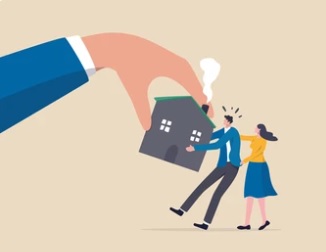
A Foreclosure is the worst record possible on your credit score. Staying 7 years as a negative record.
As the nation enters 2022, a tidal wave of foreclosures actions are on the horizon. It is a fact that Foreclosure Actions are on the Rise. Hundreds of thousands of homeowners were (delinquent on mortgage payments or in foreclosure) prior to the pandemic at the start of 2020. After March 2020, over 3 million additional homeowners fell behind on payments due to loss of income or worse hardships. Only about 2/3 of these homeowners have caught up on payments as of January 2022. This means there are over a million homeowners still behind on payments. A million plus homeowners soon to be in foreclosure. These homeowners need to understand how the foreclosure listing on their current credit report impacts their future financial reputation. More important, they need to understand how a Foreclosure will impact their credit rating with the three credit bureaus.
What is Foreclosure?
Foreclosure is when a mortgage lender takes legal action to take over ownership of a borrower’s home. Each state has it’s own laws to govern how a mortgage company can foreclose on a borrowers home. The lender must first notify the homeowner they are in default of their mortgage contract. This occurs usually between 3 to 9 months of delinquency. When a homeowner is in default of their loan, they must legally cure the total delinquency. This is commonly referred to as “defaulting on your mortgage”. The homeowner is no longer able to make single or double payments anymore. They must find a way to reinstate the entire past due. Mortgage companies refer to this as “Self Curing”. If the homeowner is unable to cure the defaulted delinquency, the lender takes Legal Foreclosure Action. They take over ownership of the home, and sell the home to either a third party buyer, or their investment department purchases the home to resell in the open market at a later time. With the real estate market at fever pitch and home values at historic highs, Foreclosure homes do not take long to be purchased.
If you find yourself in Foreclosure, your first act must be to find legitimate ethical help. Our Advocates here at Homeowner Protection Alliance have been helping and protecting homeowners from foreclosures for over a decade. HPA has helped over 10 thousands homeowners find strategies and programs to avoid foreclosure. Thousands of their reviews and hundreds of their videos can be found on the HPA Rescued Members Page. Each family we protect from foreclosure, becomes a member of our Advocacy Group. Further helping the cause. Passing on the message. Homeowner are not alone when fighting for their homes.
How does a falling behind on payments impact your Credit score?
When a homeowner falls behind on payments their mortgage company immediately reports this delinquency to the three credit agencies. The three credit agencies being (Experian, Equifax, Transunion) Information about the Credit Agencies and their role with credit reporting can be found on this very informative article. A late payment or two or three will lower a consumers credit score by 30-50 points.
How does a Notice of Default impact your Credit score?
A Default on your mortgage loan will lower your credit score by 100 points or more. A default on your most important asset (home) demonstrates that you took out a mortgage loan and could not keep up to date with the agreed payments. If you apply for credit in the future, creditors will see this information. They will assume that your default history means there’s a higher risk of you not paying them back. Your reputation as a borrower takes a big hit with a Default.
Your creditor can also take further action after the account has defaulted, including:
- Referring the Default to their Foreclosure Attorneys or Law Firm.
- Taking court action to commence Foreclosure Action. Applying to the court to take back the home in Foreclosure.
How does a Foreclosure impact your credit score?
Foreclosure is the absolute worst action on your credit score. There are incorrect myths that a Bankruptcy or “settle for less” action on your credit report are the most derogatory actions, however this is not how the current financial world views credit reports. No action impacts the opinion of future banks and lenders reviewing your future credit reports, as much as a Foreclosure action. Foreclosure on your credit report lowers your score by 150 to 200 point. Depending on case by case trigger data such as months in delinquency, size of the loan, and length of time owning the mortgage.
The interesting data is this: the better your credit score, the more it will drop if you are foreclosed upon. Meaning if you have a great credit score of let’s say 750. If foreclosed upon, your score could drop as much as 250 down to a subprime range of 500.
A foreclosure data report typically appears on your credit report within two months after the lender commences foreclosure action. The entry remains on your credit report for seven years from the date of the first missed payment that began the foreclosure.

How will Lenders See the Foreclosure record on your credit?
More important than its impact on credit scores is the negative view in which lenders and financial institutions view foreclosure actions on credit reports. Every lender sets its own lending criteria, and there’s no universal rule about how a lender will treat a foreclosure in terms of this criteria. However it is safe to say all lenders consider foreclosure a serious derogatory event in your credit history, most considering it even more severe than Bankruptcy. Most creditors will not even consider applicants with foreclosures on their credit reports, sighting the high risk they yield. Thus preferring to not lend to them.
Can You Remove a Foreclosure from your credit report?
A legitimate foreclosure entry cannot be removed from your credit report before its expiration date, seven years from the date of the first missed loan payment. At that point in time, the entry should fall off your credit report on its own. If it doesn’t come off your report after that date, or in the highly unlikely event that your credit report reflects a foreclosure that never happened, you can contact the credit reporting agency that still shows the (older than 7 years) foreclosure and dispute its validity.
A foreclosure is a very stressful and difficult process that can have major negative impacts on your credit and family life. But with time and responsible budgeting , it is possible to recover and one day buy another home of your own.
How does a Loan modification Impact your credit score?
The impact of a loan modification on your credit will probably be slightly negative due to the fact it is a restructuring of your terms while you are in default of your loan, or worse in Foreclosure. If your lender reports the modification as “paid as agreed,” the modification won’t affect your FICO score. Unfortunately, the lender is likely to report the modification as “paying under a partial payment agreement” or something else indicating you are “not paying as agreed.” For example, in the past, many loans were previously modified with the HAMP (Home Affordable Modification Program—a government modification program that’s no longer available), which allowed negative reporting during a trial modification. Any “not paying as agreed” report will negatively impact your credit score—although it’s not likely to be as negative as a short sale, foreclosure, or bankruptcy. Homeowner who are considering applying for a Loan Modification should never apply on their own, an always use the help of an experience housing agency or
According to the American Bankers Association, once a permanent modification is in place, your score should improve. timely payments will appear as paid in accordance with the new agreement.
Homeowner Protection Alliance is a proud cost free Advocacy Group intent on helping homeowners find solutions to foreclosure prevention.